
GEOMETRY
Court-aware
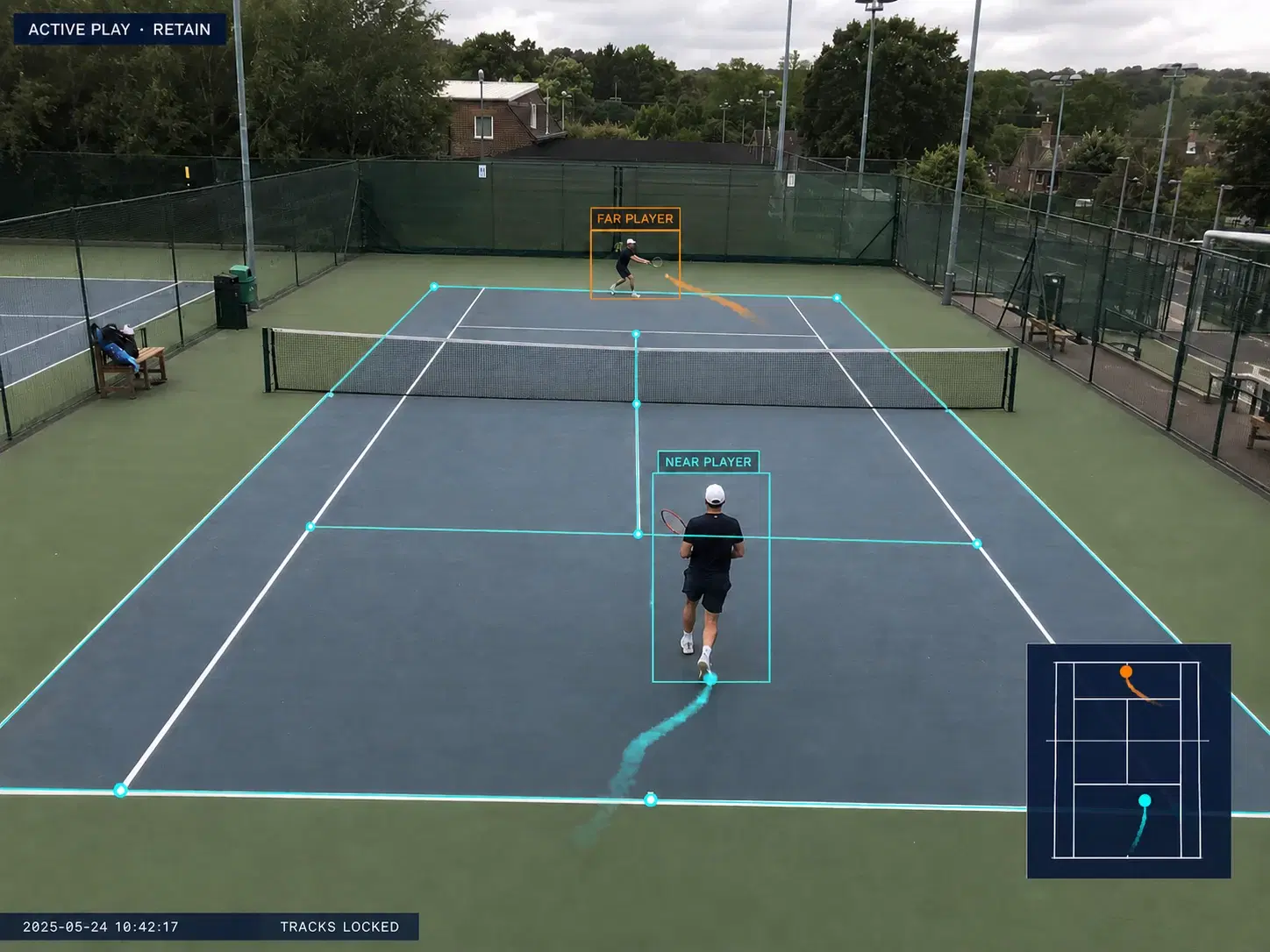
Camera positions projected into a common court space
SPORTS VIDEO · COMPUTER VISION · MEDIA AUTOMATION
We built a processing pipeline that tracks both players, maps their movement to a normalised court and identifies serves and rallies so long match recordings can be condensed around meaningful play.
GEOMETRY
Court-aware
Camera positions projected into a common court space
SEGMENTATION
Player-led
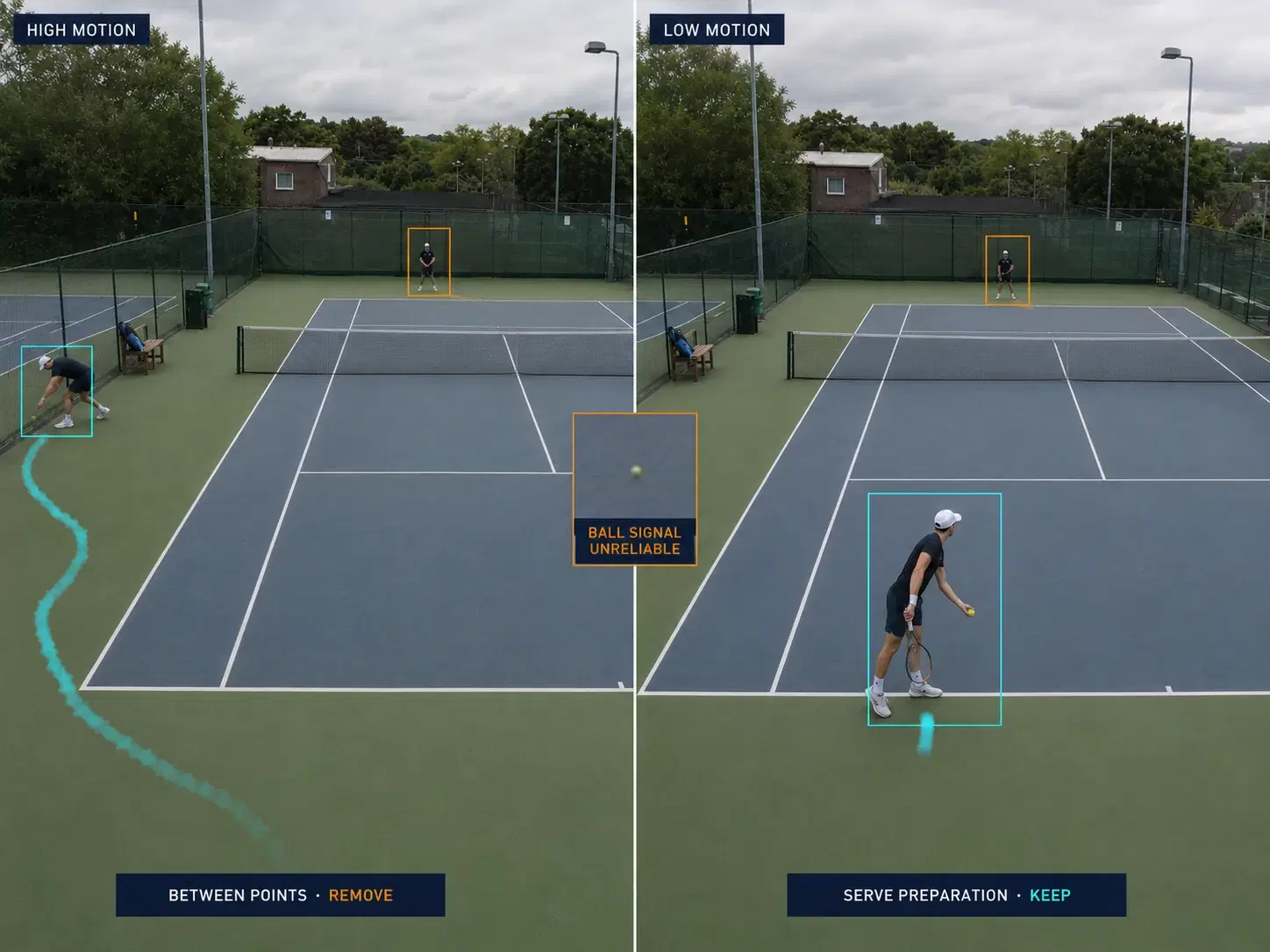
No dependency on continuous ball tracking
OUTPUT
Explainable
Event timelines and visual debug evidence
What the prototype established
THE PROBLEM AND HYPOTHESIS
A player collecting a ball may move more than a server preparing to begin a point. Generic motion detection therefore retains the wrong material. The tennis ball is a useful signal when visible, but from a single fixed amateur camera it is often only a few pixels, blurred or completely occluded.
The system needed to model the structure of the sport. Player positions become more meaningful when projected onto a consistent court. Serve preparation, court-side identity, speed and temporal transitions can then be combined into a conservative state machine.
COURT AND TIMELINE MECHANISM
The combined mechanism projects player locations onto a calibrated court and turns their behaviour into an inspectable active-play timeline.
01 · Test stage
Calibrate fixed camera
02 · Test stage
Register court geometry
03 · Test stage
Project player locations
04 · Test stage
Track player behaviour
05 · Test stage
Segment serve / rally / idle
06 · Test stage
Export explainable timeline
ENGINEERING DECISIONS
Homography makes player position and velocity rules interpretable across perspective. A fixed installation turns camera registration into controlled configuration rather than repeated inference.
Computer vision
Ball evidence can strengthen a decision when available, but player geometry and temporal behaviour remain the primary signal. The pipeline therefore continues to operate when the ball is blurred or occluded.
Model strategy
Detection produces a structured event timeline. FFmpeg later extracts and joins intervals. Thresholds and editing policy can be adjusted without rerunning every expensive model stage.
Media processing
VALIDATION LIMITS
The method assumed a fixed camera and required court calibration. It demonstrated an explainable active-play timeline without claiming reliable continuous ball tracking across arbitrary footage.
RESPONSIBILITY
Bounded video-intelligence prototype
SELECTED TECHNOLOGY
RELEVANT EXPERIENCE
You need to extract meaningful events from long, fixed-camera recordings.
You need domain geometry and temporal rules around imperfect model evidence.
You need explainable analysis that can support later product features.
RELATED WORK
GKM TECH
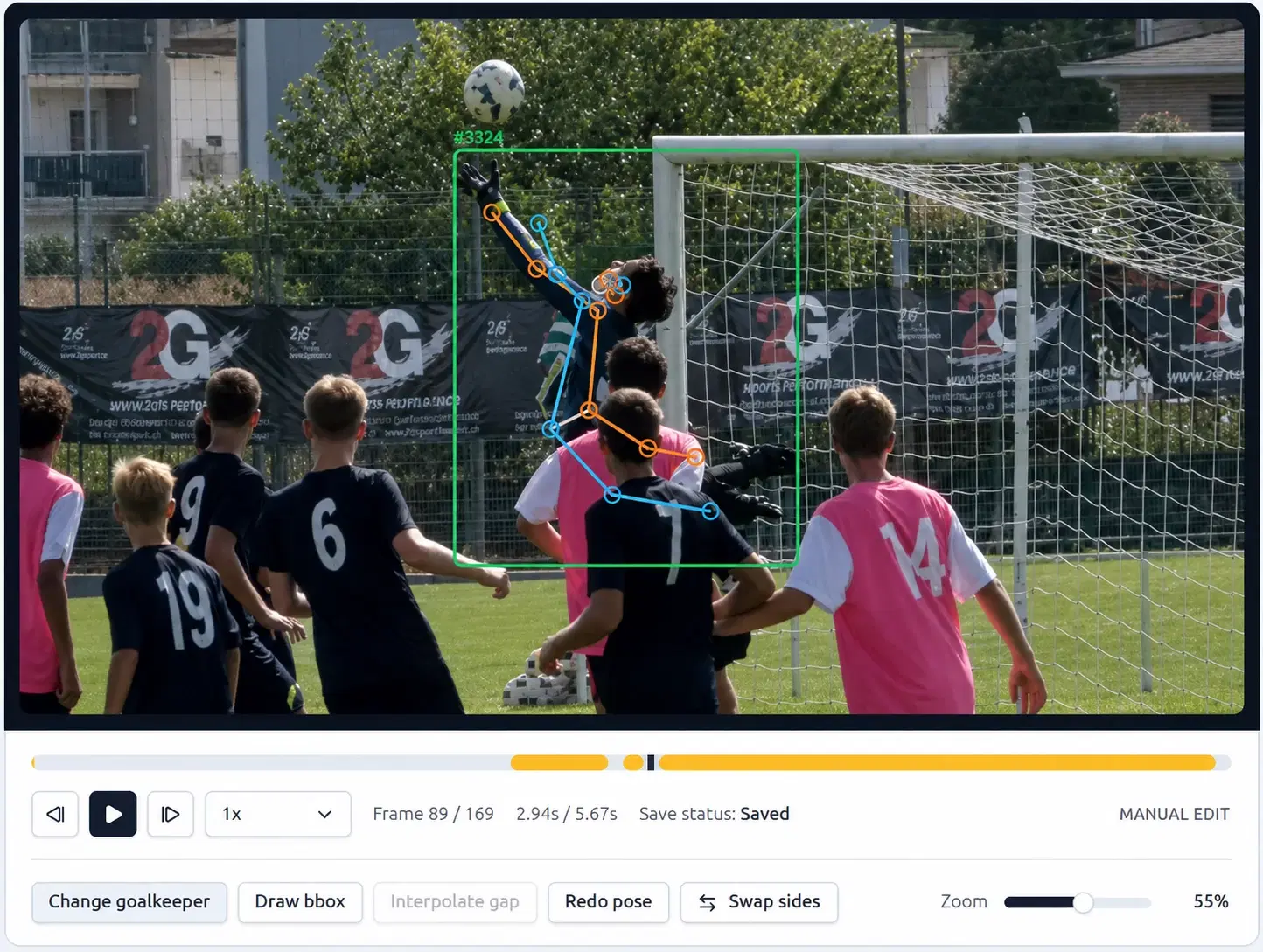
Customer platform, video-processing backend and specialist annotation workflow.
View case study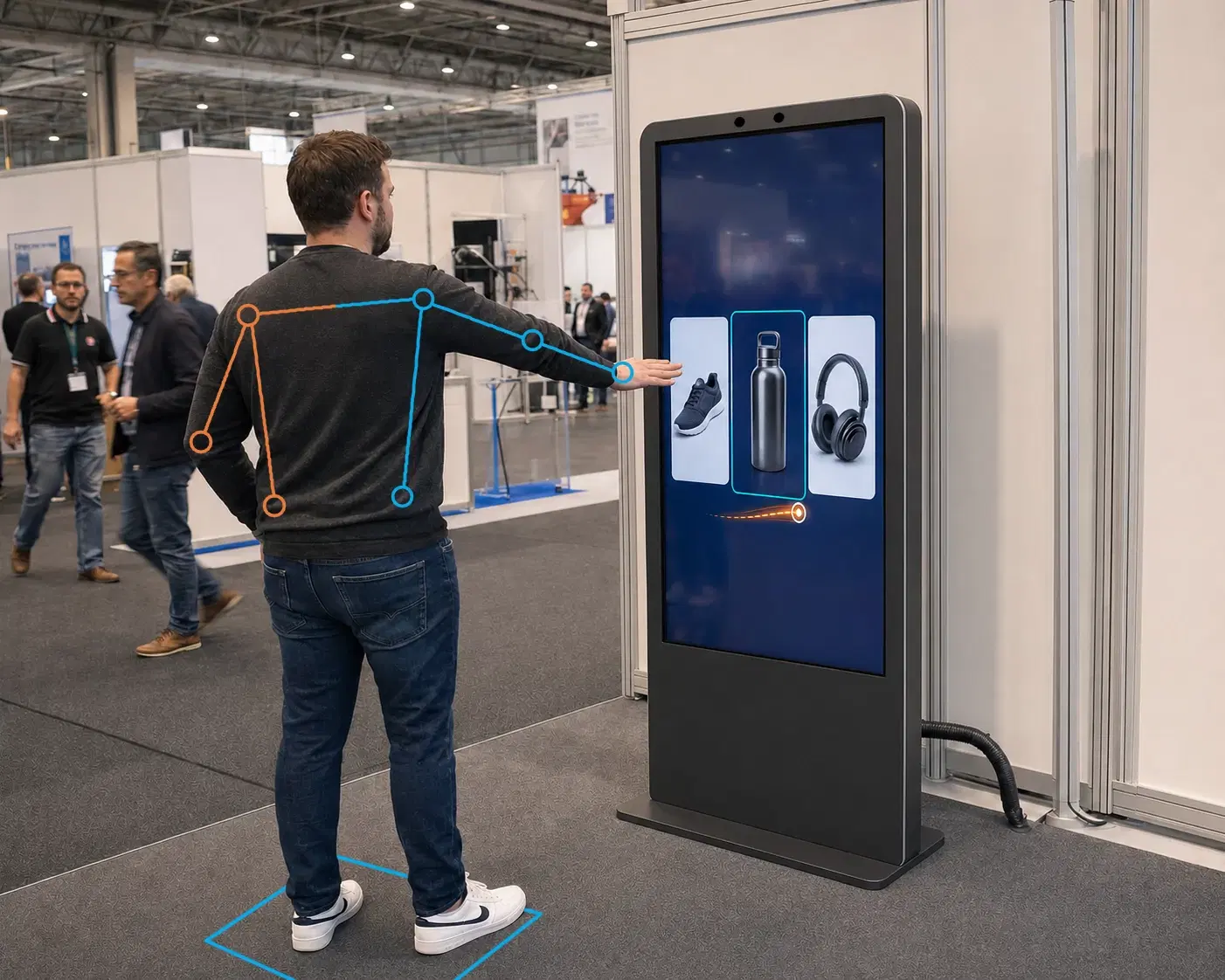
INTERACTIVE KIOSK
Three accepted milestones covering depth, pose and active-user tracking.
View case studySTART A CONVERSATION
We can help define the event, test the available visual signals and build a processing workflow that fits the real cost of mistakes.