PRODUCTION
Multiple UK venues
Per-venue models and configuration
HOSPITALITY · CUSTOM SOFTWARE · COMPUTER VISION
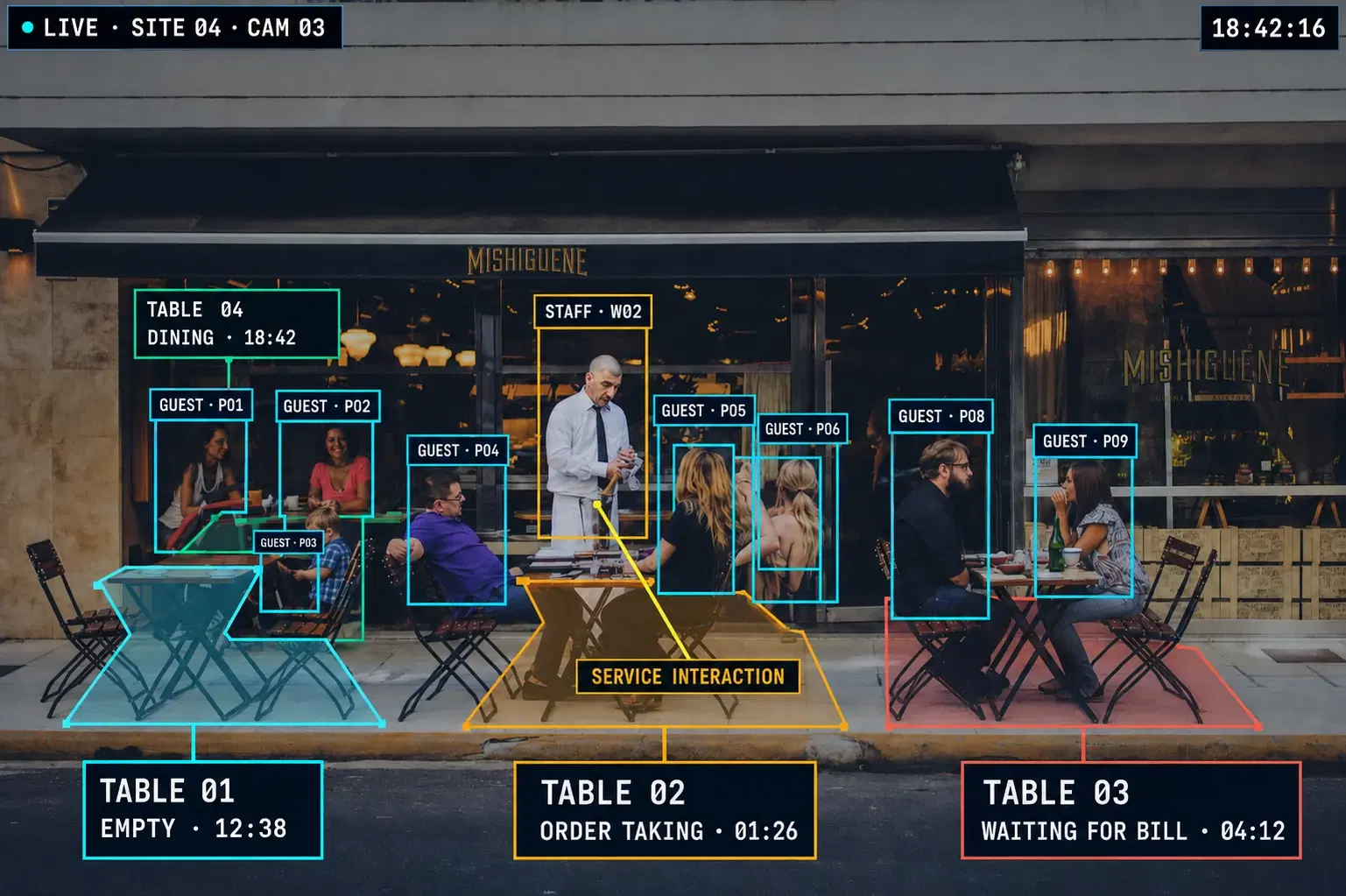
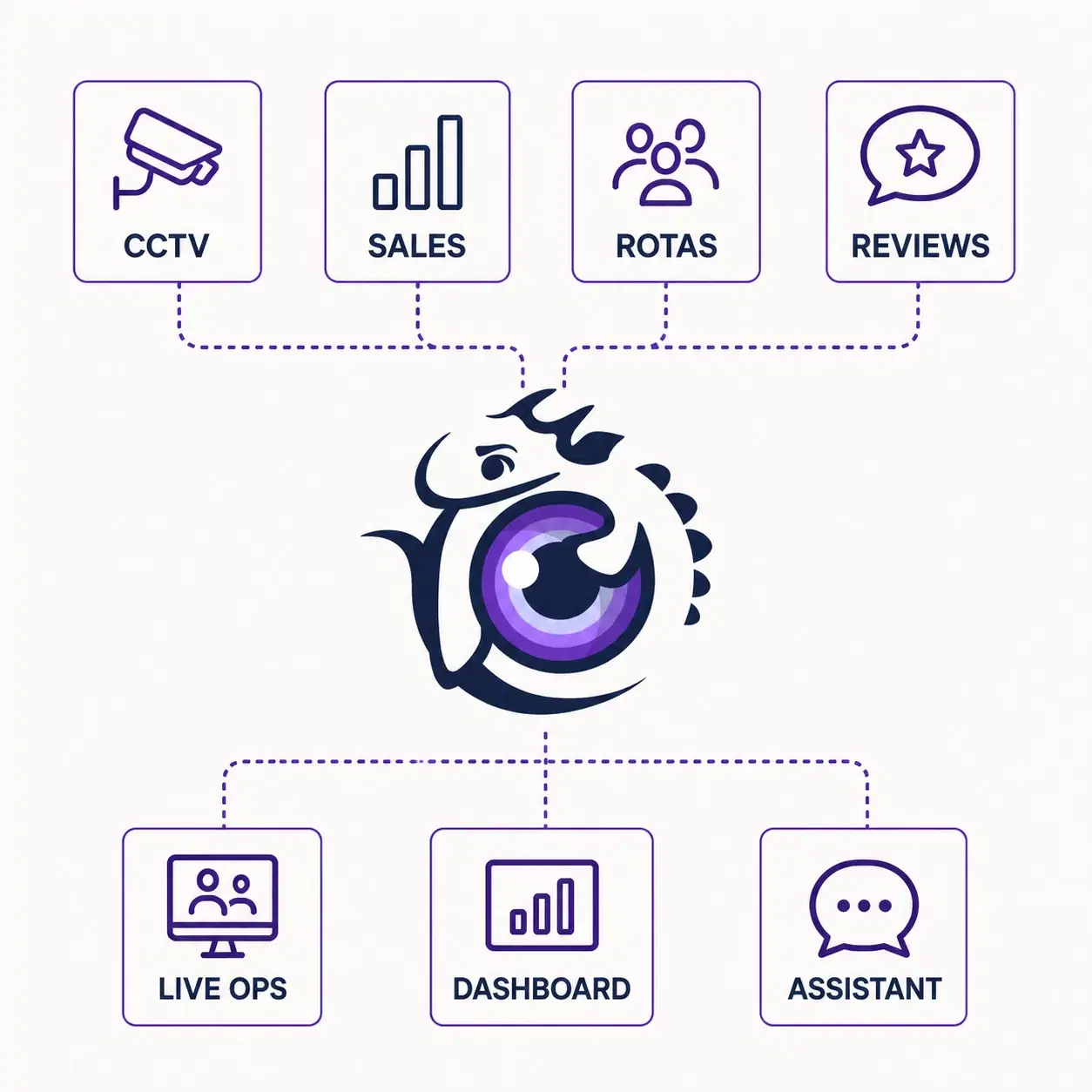
Eyezilla combines edge computer vision with sales, labour, weather and inventory data to show restaurant operators where demand is building, where service is slowing and how each venue is performing.
PRODUCTION
Multiple UK venues
Per-venue models and configuration
COMPUTER VISION
Edge processing
Detection, tracking and queue analytics
OPERATIONS
One decision layer
CCTV, POS, labour, weather and inventory
PROJECT SNAPSHOT
01
Restaurant operators could see sales and labour after the event, but the physical customer journey remained largely invisible. CCTV contained useful operational evidence, yet watching footage manually could not support live, multi-venue decisions.
02
We built a full B2B SaaS platform spanning on-site GPU processing, cross-camera tracking, data integrations, forecasting, operational evaluation, dashboards and remote fleet management.
03
We owned product definition, computer vision, data integrations, application engineering, deployment and continued production operation.
What we now operate
Eyezilla is a real game-changer for us. Knowing exactly the behavior of our customers and the areas we have to focus on week after week is priceless.
Cristiano S.
Area Sensei & New Site Opening Manager
Eyezilla operator feedback
EDGE-TO-OPERATIONS ARCHITECTURE
Processing stays close to each venue while configuration, joined operational data and operator-facing outputs remain part of one managed product.
01 · System layer
Venue camera / NVR
02 · System layer
On-site GPU processing
03 · System layer
Event stream and cloud services
04 · System layer
POS, labour, weather and inventory joins
05 · System layer
Operator dashboard and alerts
SELECTED SYSTEM EVIDENCE
01
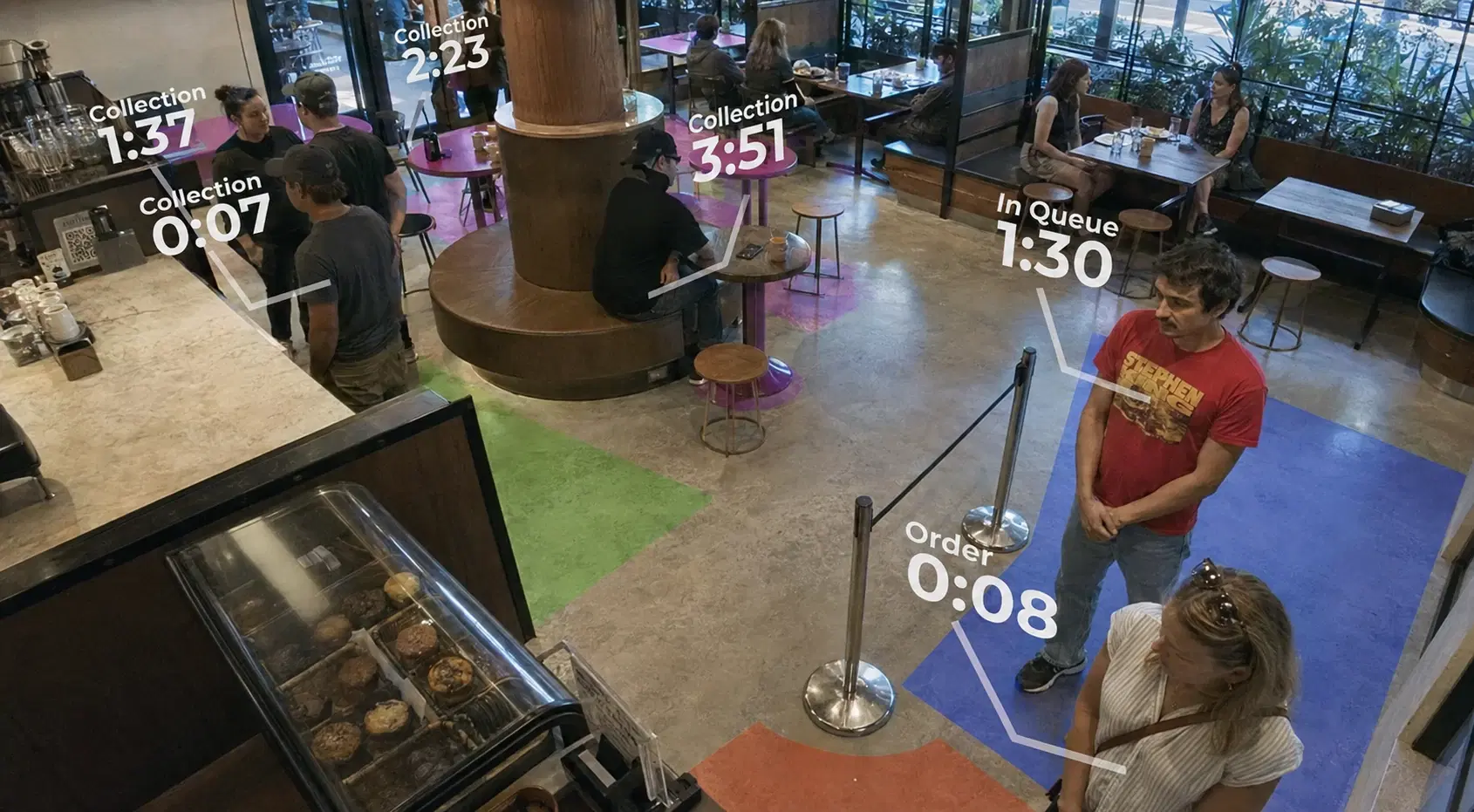
Each venue runs a producer-and-consumer pipeline on an on-site GPU device. Camera frames are captured from the existing NVR, masked to the useful regions and processed in batches. Fine-tuned person detection, single-camera tracking and appearance embeddings create usable track fragments without sending continuous raw video to a central cloud service.
Why it mattered
Processing close to the cameras reduced network dependency and made the system practical for several live feeds per venue.
02
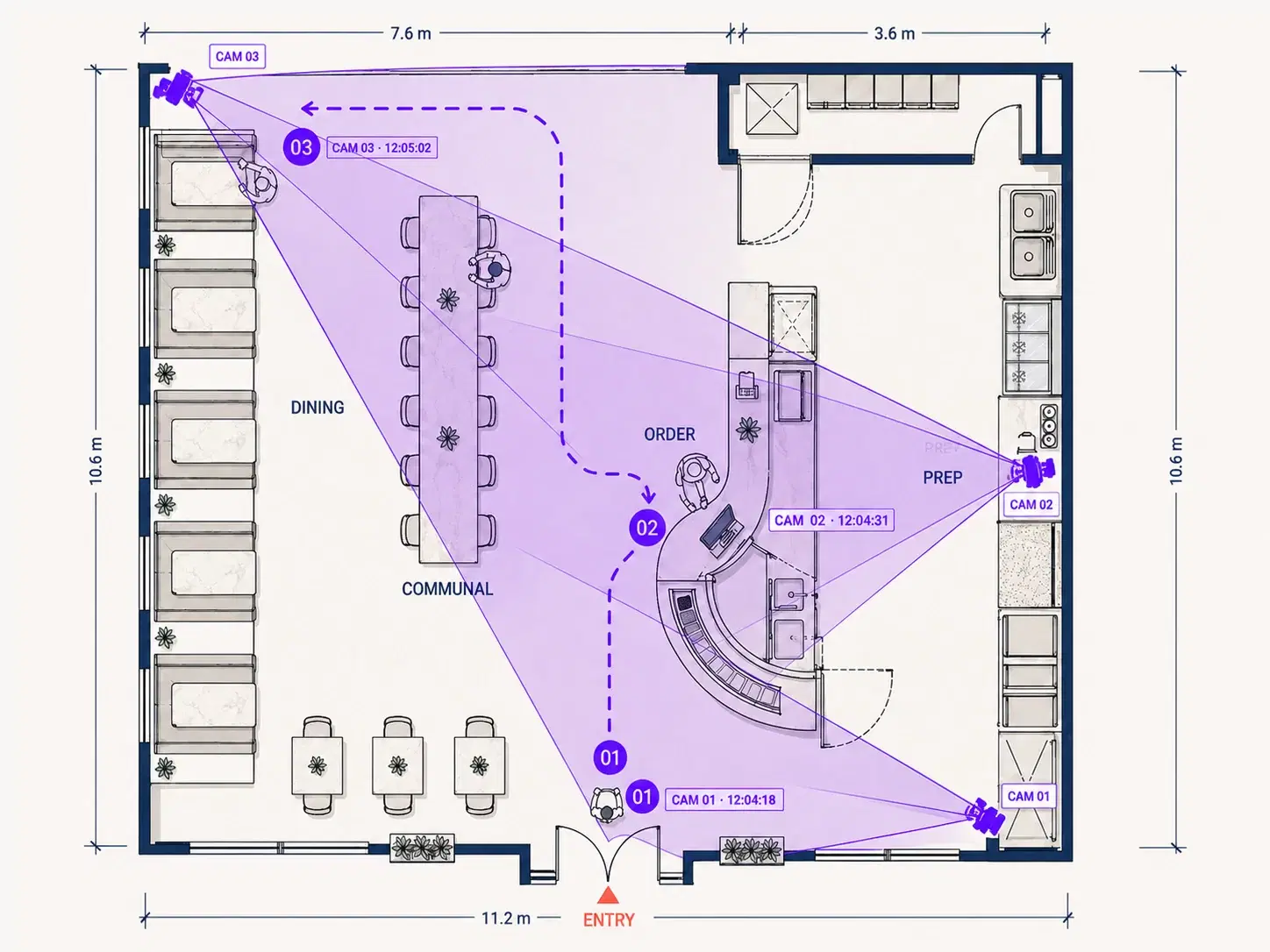
Camera coordinates are projected onto a shared two-dimensional floor plan. The system combines appearance similarity with path plausibility, including walls, walking distance, time gaps and realistic movement speed. That allows fragments from different cameras to be joined into a more stable customer journey.
Why it mattered
Queue, station and end-to-end service analysis depend on understanding the same visit across several views.
03
The platform joins computer-vision output with POS transactions, labour costs, weather and inventory on a consistent half-hourly timeline. Forecasting and evaluation models estimate demand, compare similar operating periods and classify the likely constraint behind each result. The dashboard presents these findings in business language rather than exposing raw model outputs.
Why it mattered
Restaurant teams needed to know what to investigate, not simply receive another set of charts.
ENGINEERING DECISIONS
Appearance embeddings alone become unreliable when staff uniforms, lighting and camera angles are similar. Eyezilla also evaluates whether two track fragments could represent a physically plausible journey through the mapped venue. This makes the identity decision more specific to the real environment.
Computer vision
Continuous multi-camera video is processed on venue GPU devices. Cloud services receive operational results and manage configuration rather than acting as a mandatory relay for every frame. Remote access, deployments and monitoring run over a controlled mesh without requiring customer port forwarding.
Production architecture
POS and labour integrations compare source totals with stored data and reload only a day that has drifted. The analytics mart waits for completeness across its required sources before building a period. This prevents a technically successful job from presenting a partial operating picture.
Data reliability
RESPONSIBILITY
Founder-built product · ongoing operation and improvement
SERVICES USED
SELECTED TECHNOLOGY
RELEVANT EXPERIENCE
You need to turn cameras or sensors into an operational product rather than an isolated detection model.
You need to combine physical-world evidence with existing sales, staffing, ERP or operational data.
You need software that can be configured and operated across several sites without rebuilding the product each time.
RELATED WORK
AURRENCY
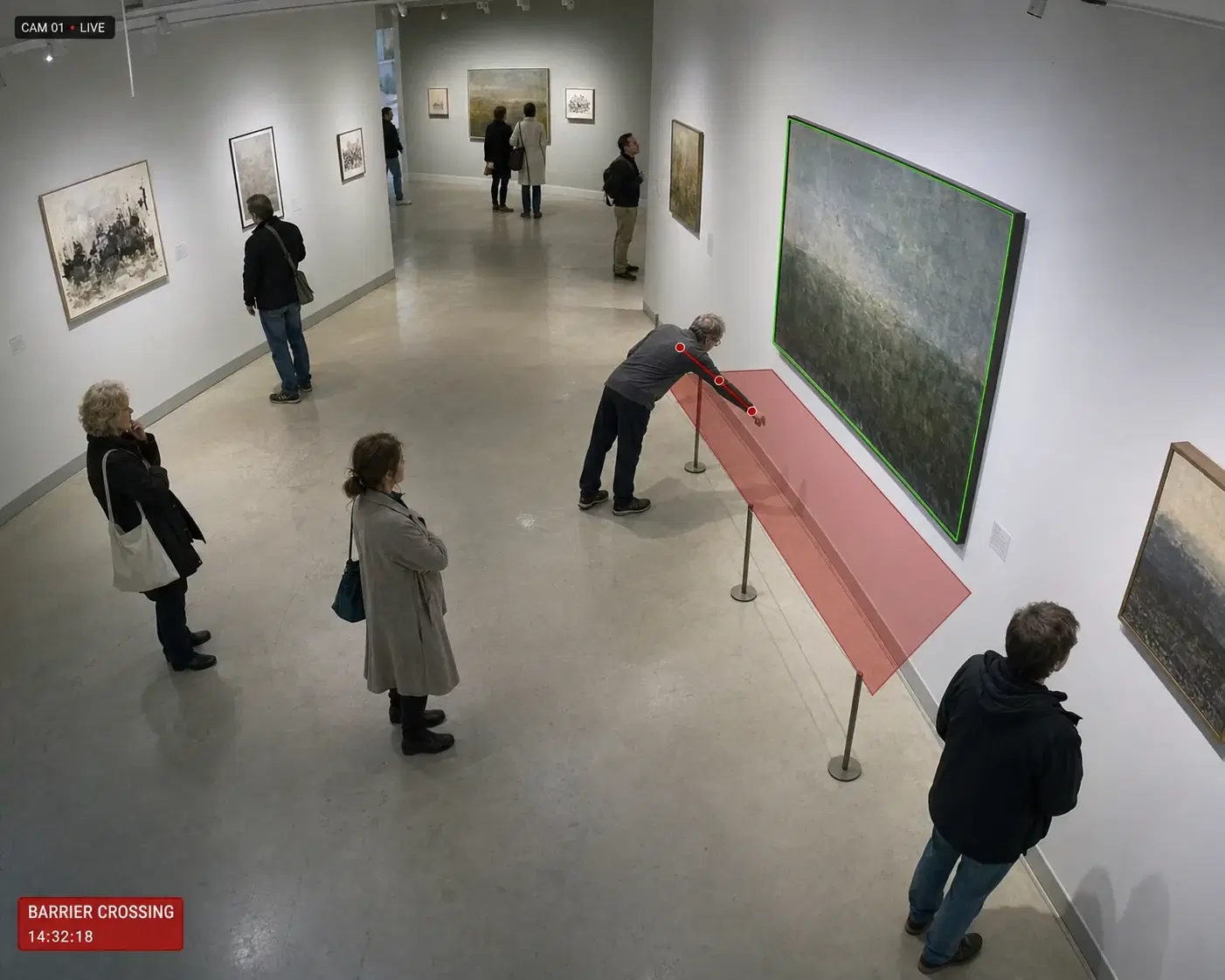
Client-specific anti-theft logic delivered through shared camera, job, scheduling and evidence infrastructure.
View case study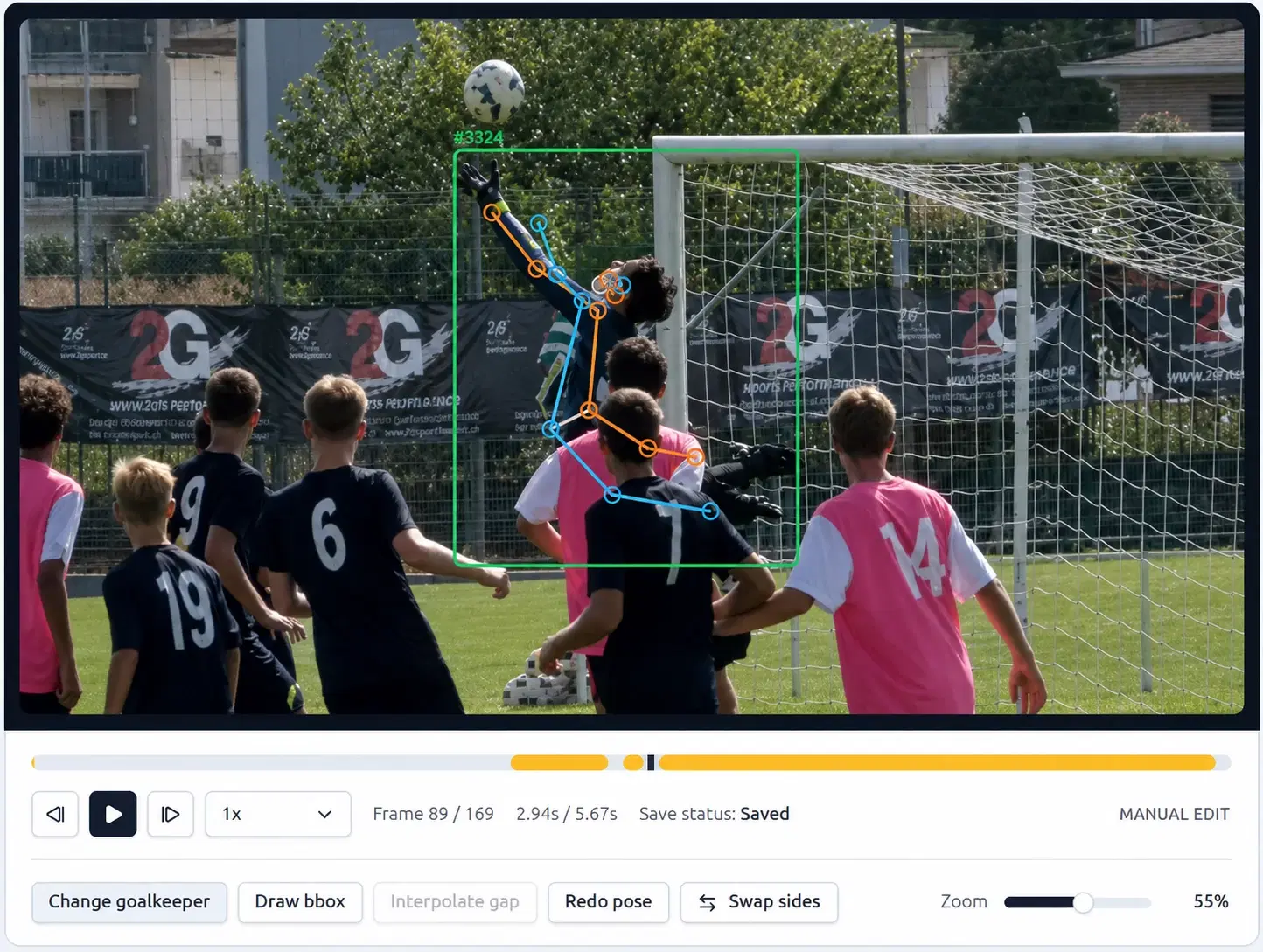
GKM TECH
Customer platform, video-processing backend and specialist annotation workflow.
View case studySTART A CONVERSATION
We can help define the useful decision, test the difficult technical assumptions and build the complete path from input to operated product.